Drone Engineering Education: The Skills Future Builders Actually Need
Tomorrow’s most dangerous drone may be built by someone who can make it fly—but cannot prove how it behaves when reality breaks the assumptions.
Future builders need systems literacy, not assembly tutorials. Education must begin with six-degree-of-freedom dynamics, aerodynamics, propulsion and control. Students should explain how latency, saturation, wind and sensor noise destabilize flight—not merely copy PID values.
Next, unite hardware and software: embedded C/C++, Python, MAVLink/CAN, GNSS, IMUs, state estimation and sensor fusion. ROS 2 and PX4 should be studied as inspectable architectures. Vision and machine learning matter only when paired with dataset shift, uncertainty, edge-compute limits, cybersecurity and safe fallback behavior.
Make the curriculum failure-first. Every vehicle should pass software- and hardware-in-the-loop simulation, fault injection, log analysis and controlled testing. Learners must provoke GNSS loss, battery sag, motor failure, corrupted telemetry and estimator divergence before claiming reliability.
Regulation must become a design input. EASA’s SORA links a mission to ground risk, air risk, mitigations and assurance. NASA’s UTM research shows that scalable BVLOS also requires digital coordination in shared airspace. Builders therefore need airworthiness, human factors, privacy and operational-risk analysis.
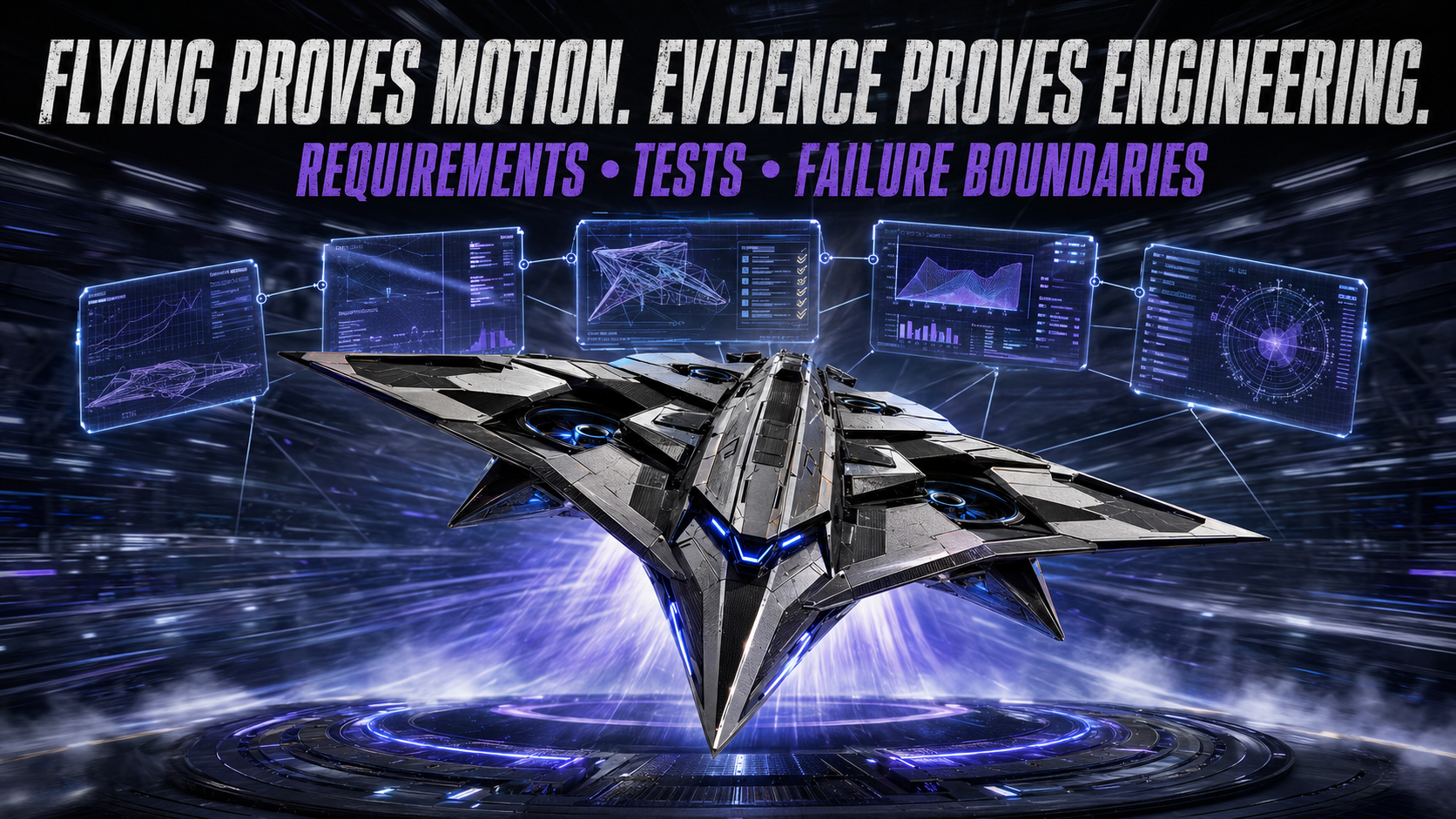
The best final project is not a flashy prototype but a safety case: measurable requirements, test evidence and failure boundaries. The future belongs to engineers who can build aircraft, challenge their assumptions and prove trustworthy behavior under uncertainty. Flying is the demonstration; verified resilience is the product.
Explore more articles →